Toughest Preferred Materials for Park Chair in High-Traffic Areas [Anti-Vandalism Guide]
The preferred materials for park chair must deliver reliable performance year after year.
Sites like transit stops, urban plazas, school campuses, and downtown parks deal with constant foot traffic, graffiti, physical impact, and weather that doesn’t take a break. Get the material wrong and it chips, rusts, or cracks fast. Get it right, and it stands up to vandalism, salt air, freeze-thaw cycles, and loads reaching 1,000 pounds without issue.
This anti-vandalism guide covers the six materials that actually survive high-traffic use: what they resist, where they fail, and how long they last.
Key Factors to Choose Preferred Material for a Park Bench
When selecting a bench for public areas, long-term performance determines whether it is a good investment. The following factors help buyers evaluate different materials before making a final decision:
Yield strength and weight capacity, because they will determine how much pressure the bench can withstand without bending
Hardness, which determines how the surface will resist knife or key scratches and general wear
Corrosion resistance, depending on the environment, either marine or places where there is heavy rainfall and moisture
Graffiti cleanability, rated from soap and water removal up to full repaint
Flame spread index becomes relevant in places where there are fire sources, such as grills, roadways, or fire-prone areas
Lifecycle cost, which balances cost and years of useful life
Each of these factors gets its own detailed look in the breakdown below, covering the specific numbers, ratings, and tradeoffs behind every bench material used in high-traffic public spaces today.
Preferred Materials for Park Chair: Technical Breakdown for Anti-Vandal Use
Here are the materials used in commercial park benches that actually last. We will talk about how each one resists damage, where it tends to fail, and how it performs under real testing standards rather than marketing claims.
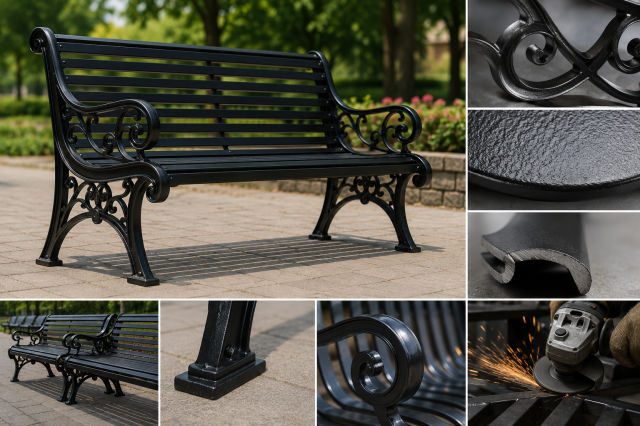
Wrought Iron: A Proven Base Material for Public Seating
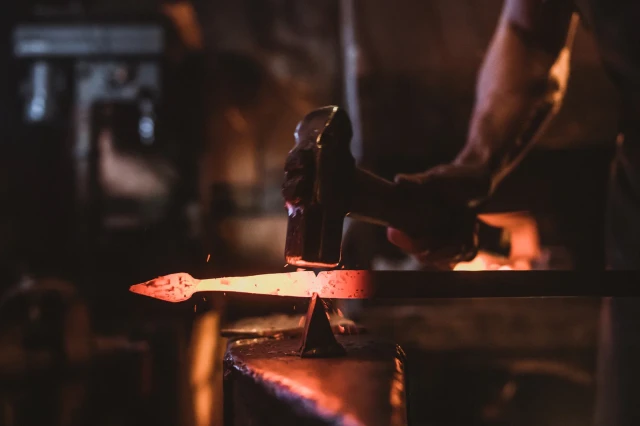
Wrought Iron has remained a reliable choice for public seating because of its strength, density, and ability to handle repeated stress. The material features a fibrous grain structure inside that prevents it from cracking when subjected to impact.
Wrought Iron has a yield strength ranging between 30,000 and 40,000 PSI, depending on the forging technique. This makes it very similar to the strength of structural steel.
Vandal data:
Graffiti: Cleans up well once a rust-resistant coating is applied. ASTM D6578 ratings for this material are Level 1-2 when using polyurethane or epoxy finishes and can be cleaned up with solvent in less than 2 minutes.
Impact: Impact strength measured using the Charpy test for quality wrought Iron is 20-30 ft-lb at room temperature, making it better compared to Cast Iron, whose impact resistance is below 5 ft-lb. 200 lb weight dropped from 4 feet does not crack but deforms.
Fire: Fully non-combustible, posing no flame-spread risk at all. ASTM E84 Class A with a flame spread index of 0 and smoke development index of 0. Melting point exceeds 2,700°F, so surface charring is the only concern in extreme heat.
Cutting: Rockwell B-scale hardness ranges from B60–B70. Knives skate on sealed surfaces, and power-tool cutting requires abrasive discs because of the fibrous slag inclusions that bind the blade.
Weight: Typical bench frames run 120–200 lb before coating. This increases installed stability and discourages relocation without equipment.
Hannah Iron uses its own range of coating solutions for raw wrought Iron. We have over 6 types of coatings to protect the Iron from rust and any other form of weathering when used outside. This is what makes the difference between a bench made of wrought Iron that will last for 20 years and another that rusts within five years.
Installation costs of wrought Iron can be relatively high as compared to regular steel products. But longevity compensates for that in the long run.
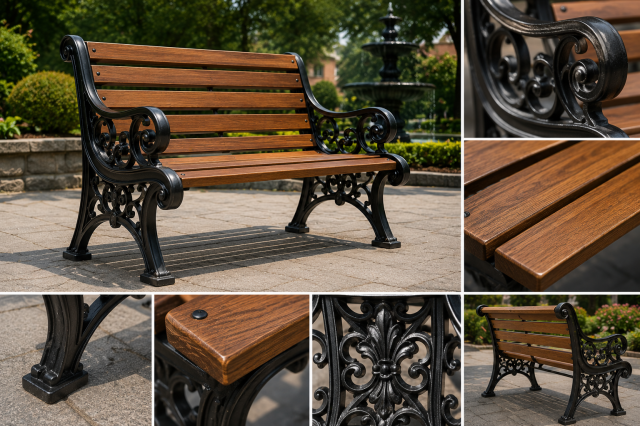
Cast Iron with Wood Seat Inserts: Classic Strength Paired with Comfort
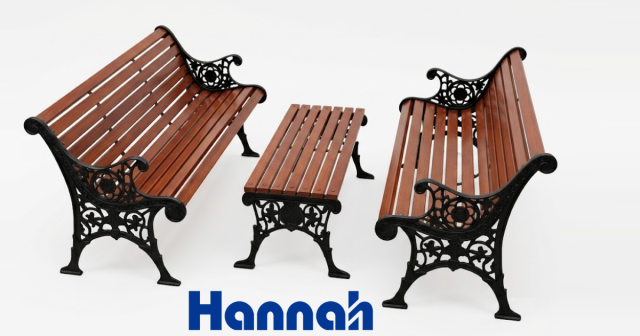
The combination of cast iron structure with wooden inserts for seating is one of the classic designs used in park bench manufacturing. This type of bench design can be seen in historic parks, gardens, memorial areas, and municipal projects where a classic appearance is preferred alongside structural stability.
The frame made of cast Iron takes care of structural load-bearing and prevents the possibility of theft due to its weight.
Vandal data:
Graffiti: ASTM D6578 rating is Level 1–2 since the paint sticks to the non-porous material and can be removed using solvents in 1–3 minutes.
Impact: Cast iron has high compressive strength, between 40,000–60,000 PSI, and low impact toughness, with Charpy values of 2–5 ft-lb.
Fire: Iron poses zero fire risk. It is ASTM E84 Class A with a flame spread index of 0 and does not contribute fuel.
Cutting: Iron cannot be cut easily. Surface hardness of cast Iron is about 170-220 Brinell (85-95 Rockwell B scale), which makes any cutting impossible by hand and possible only by abrasive discs.
Weight: Sufficiently heavy to discourage theft without tools. Cast iron pieces usually weigh around 150–300 pounds each, while the total weight of the bench is 250–450 pounds, wood included. This adds stability to the installed piece and makes it harder to relocate by an unauthorized person.
Hannah Iron builds this exact combination as part of our product line. We pair cast iron strength with wood comfort in pieces like its Victorian-style scroll bench. Reapplying a wood sealant every year or two keeps the seat portion from cracking, while the cast iron base needs little beyond a coating check during routine inspection.
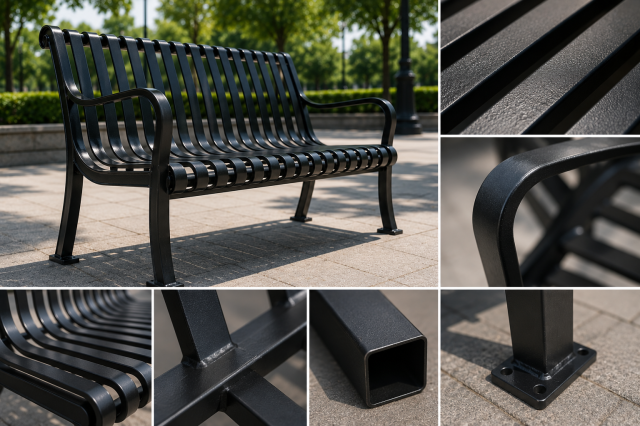
Powder Coated Steel: The Commonly Used Metal
Powder-coated steel still tops the list of the most common metals used in making commercial park benches since it provides an economical combination of strength, cost, and versatility in design. The yield strength of this material ranges from 36,000 to 50,000 PSI, while salt spray resistance due to a proper powder coat application equals or exceeds 3,000 hours.
Vandal data:
Graffiti: Cleans off easily with an anti-graffiti topcoat. ASTM D6578 ratings reach Level 1–2 on TGIC polyester powder coat with permanent urethane clear coat.
Impact: Dents under heavy force but rarely cracks due to steel’s ductility. Charpy impact values for A36 steel are 15–20 ft-lb at room temperature.
Fire: Fully fire safe, rated ASTM E84 Class A with a flame spread index of 0 and smoke development index of 0.
Cutting: Hard enough to resist most knives. Rockwell B70–B80 hardness on the powder-coated surface. Abrasion resistance per ASTM D4060 is <50 mg loss with CS-17 wheel, 1,000 cycles. Power cutting requires abrasive discs or saws.
Weight: Moderate, easier to install than Iron but less theft-resistant. Typical 6 ft bench frames weigh 80–120 lb. Total installed weight with slats runs 130–200 lb. Lower mass reduces freight and labor costs but allows relocation without equipment.
Steel is cheaper initially than either wrought or cast Iron, and therefore is a reasonable choice for lower-risk areas. Yet, it does not offer the same weight and anti-vandal protection that Iron provides.
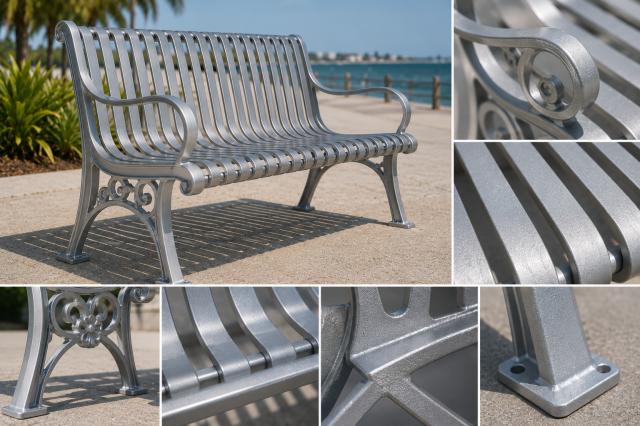
Cast Aluminum: Most Suitable for Coastal Areas
Due to its corrosion resistance capability, Cast aluminum is widely used in outdoor parks that are situated close to coastal and beach environments.
This metal does not have any iron in it and thus does not rust even if kept in humid conditions or air that has a lot of salt in it. Its tensile strength ranges from 25,000 to 35,000 PSI, which is much lower compared to Iron and steel but sufficient for regular public usage.
Vandal data:
Graffiti: Cleans very well thanks to a non-porous surface. When finished with a polyester powder-coated topcoat, it achieves ASTM D6578 Level 1.
Impact: Can crack under a sharp, concentrated hit due to lower ductility. Cast aluminum alloys like A356 have tensile elongation of 2–5% and Charpy impact values around 3–6 ft-lb.
Fire: Fully fire-safe. ASTM E84 Class A with a flame spread index of 0. Aluminum melts at 1,221°F but does not ignite or contribute fuel load at ambient temperatures. In direct flame exposure, it will slump before combusting.
Cutting: Softer than Iron, shows scratches faster. Surface hardness is approximately 60–80 Brinell, or Rockwell B50–B60. Abrasion resistance per ASTM D4060 is 70–100 mg loss with a CS-17 wheel, 1,000 cycles.
Weight: Lighter, which slightly lowers theft resistance compared to cast Iron. Typical 6 ft bench frames weigh 45–75 lb, with total installed weight around 80–130 lb.
While aluminum may not match the impact strength of heavier metals, its combination of rust resistance, lower weight, and reduced maintenance makes it one of the preferred materials for park chair applications in challenging marine environments.
Recycled Plastic: Lowest Maintenance Option
Recycled HDPE plastic neither rots, splinters, nor rusts and, therefore, maintenance is minimal when compared to either of the other two options. It generally requires some metal sub-frame in order to match commercial weight standards.
Its tensile strength normally ranges between 3,000–5,000 PSI, and its excellent resistance to impacts makes it bend rather than break under pressure. However, its lower stiffness compared with metal materials means proper frame support is required for commercial park benches with higher weight capacity requirements.
Vandal data:
Graffiti: Wipes clean with basic cleaner due to a non-porous, sealed surface. ASTM D6578 ratings reach Level 1 on smooth HDPE boards.
Impact: Good flexing and shock absorption. ASTM D256 Izod impact strength for solid HDPE planks is 3.5-4.5 ft-lb/in. It is highly elongated plastic and can stretch up to 400%-600% without breaking.
Fire: Weakest point here, rated ASTM E84 Class C unless treated. Flame spread index runs 75–200 and smoke development exceeds 450.
Cutting: Soft, carves easily, though damage stays local. Surface hardness is Barcol 35–45, or roughly 60–70 Shore D.
Weight: Light on its own, needs a frame for theft resistance. HDPE density is 0.95 g/cm³, so a 6 ft bench seat with 2×4 boards weighs 40–60 lb.
Recycled plastic fits projects that prioritize sustainability and minimal upkeep, including schools, nature trails, and neighborhood parks. While it offers excellent resistance to water damage and decay, it is lighter than iron-based alternatives and may not provide the same level of security and permanence required for high-risk vandalism zones.
Bench Types and How Material Choice Changes by Design
It should be noted that not all benches are subjected to similar pressures. The section below describes different types of benches and what they require from the material used.
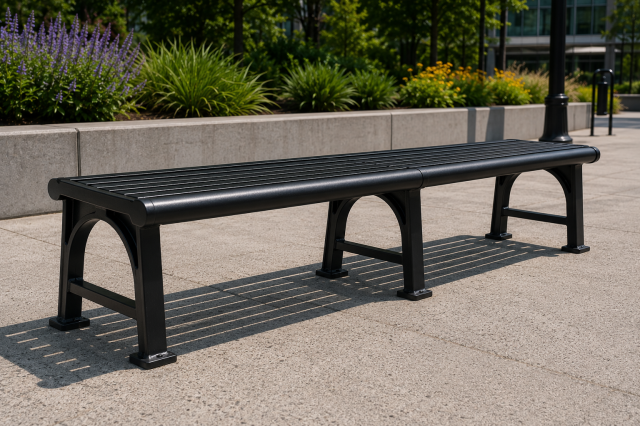
Backless Benches
Design demands: Backless benches take heavy motion all day, since people sit, stand, and jump on them without much thought. No back support means the frame alone absorbs sideways forces, so dynamic loads often run 1.5 to 2.0x the static weight, and longer spans require tighter deflection limits to avoid permanent set.
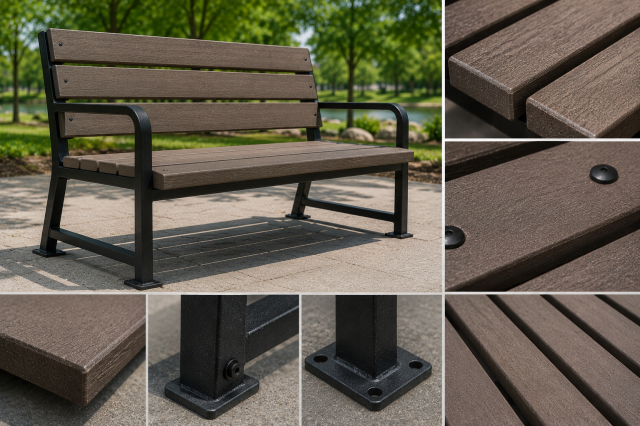
Material fit: 11-gauge to 7-gauge steel or thermoplastic-coated steel works best here, with yield strength around 36,000 to 50,000 PSI. Thin plastic bows in heat above 100°F, and cast aluminum can crack on spans over 6 feet. Iron holds up well thanks to its natural rigidity. At Hannah Iron, the backless bench capacity is specified above 800 lb.
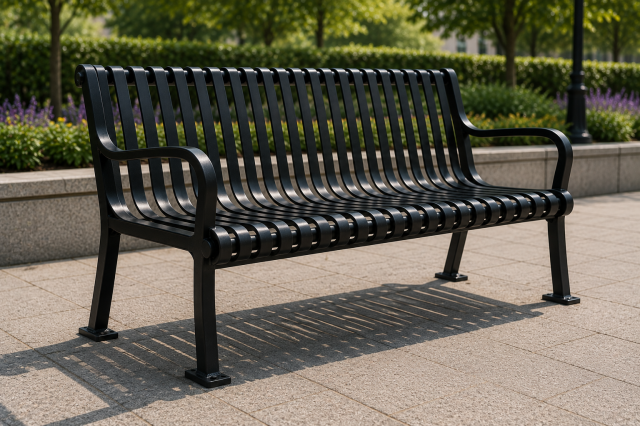
Benches with Arms
Design demands: The arms serve a purpose other than making one comfortable. This design discourages lying on the bench and prevents skateboarding. Moreover, arms stiffen the design by completing the frame circle. Considering that the load is passed through the arm welds, the strength of the weld is as important as the material.
Material fit: Welding the arms to the frame distributes the load. Both powder-coated steel and aluminum are the right materials for the weld area. Also, Iron works well in the weld area because of the density and resistance of Iron to breaking. However, the recycled plastic requires a metal rod to be placed in the arm for support.
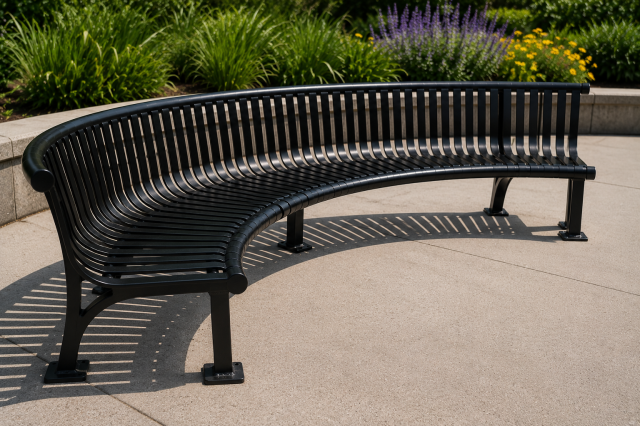
Curved Benches
Design demands: Curving makes a piece more visually appealing, but curving a structure adds stress, which isn’t present in a linear design. The cold process of shaping creates residual stress, while seasonal changes create a little bit of movement around the joints.
Material fit: Steel is easily shaped and retains its properties in spite of the curvature. HDPE has a tendency to deform when heated after being curved. Iron, just like steel, is easy to bend and retains its form long-term.
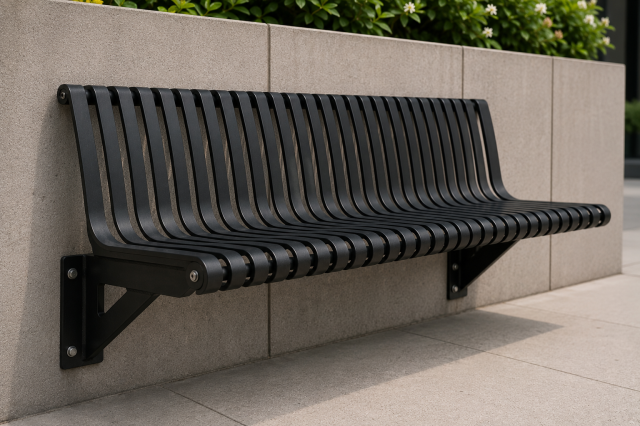
Wall-Mounted Benches
Design demands: The wall-mounted bench has no legs, meaning that the wall anchor and frame support the entire structure. All of the forces are concentrated on the points of attachment; thus, the wall becomes an integral part of the construction.
Material fit: Only steel and Iron would be suitable for such a design. HANNAH Iron uses heavy-duty steel angles, gusseted support brackets, and epoxy anchoring systems rated for 1,500 lb pull-out resistance to create secure installations that remain stable under repeated use.
Common Mistakes in Park Bench Selection
At Hannah Iron, we see people making mistakes every week that cost real money down the line. The first common mistake is picking wooden benches in downtown areas because of the beauty they possess. The problem is, wood needs regular sealing and upkeep — and downtown crews don’t have time for that. Without maintenance, the finish fails fast, and you’re left with a splintered, gray bench in two seasons.
Skipping anchors is another common yet costly mistake. A $900 bench that gets stolen can cost $1,400 or more to replace, with labor included, so tamper-resistant anchoring should never be skipped. Mixing metals causes problems as well, since steel bolts in aluminum legs trigger corrosion over time unless stainless hardware or proper isolation is used.
Heat also gets ignored more than it should. Dark metal benches in hot states can reach 160°F, hot enough to burn skin and keep people from sitting down. Buying on unit price alone causes the biggest long-term loss, though, since a cheap bench lasting two years often costs more over time than a pricier one built to last fifteen.
Quick Answers for Choosing the Right Bench
1. What is the most durable material for outdoor park benches?
Thermoplastic-coated steel and reinforced concrete are the most durable. Thermoplastic gives comfort and durability with graffiti resistance. Concrete gives maximum vandal resistance.
2. What is the best material for commercial park benches near the ocean?
Aluminum park benches are best. They are rust-resistant materials. E-coat powder-coated steel is second. Both handle salt air.
3. How do I choose the right bench material for low maintenance?
Pick recycled plastic park benches with metal frames or aluminum benches. Both need only washing. Avoid wood benches and plain steel. Lower maintenance means longer life.
4. What weight capacity do public spaces need?
Plan for an 800 lb minimum weight capacity. ADA requires 250 lb per seat. High-traffic sites should spec 1,000 lb. That covers groups and abuse.
5. Are metal benches too hot for outdoor spaces?
Dark colors, yes. Surface temps hit 150°F. Use light colors, perforation, or thermoplastic coating. That drops the temp 30–40°F.
Hannah Iron: Your Partner in Getting the Spec Right
Bench material selection rarely comes down to one factor alone. Weight capacity, corrosion resistance, graffiti cleanability, and lifecycle cost all pull in different directions depending on where a bench gets installed and how hard it gets used.
Getting this right the first time saves money and headaches for years afterward.
Hannah Iron works with park departments, schools, and property managers to build wrought Iron and cast iron seating suited to exactly these demands. We offer multiple coating options, tested load capacities, and custom manufacturing to help customers select benches correctly the first time, rather than being replaced after a rough first winter.
Have a project in mind? Contact Hannah Iron today, and let’s find the right material and bench type for your site before the order goes out.
Preferred Materials for Park Chair and Park Bench: Which One Can Last 20+ Years
Selection of the preferred materials for park chair and park benche projects is NOT a small decision. They are left outside for the whole year.
This means that park chairs and park benches have to withstand rain, sunlight, frost, and regular usage. The wrong material will deteriorate in no time, while a proper one may serve for 20+ years and even more.
That’s why distributors and homeowners both ask one question: which material is best for park chairs?
This guide answers it.
We will compare park chair materials by lifespan, cost, weight, and climate fit. So, whether you’re sourcing park chairs for a public project, commercial space, or your own property, read on to see how different materials compare in real outdoor conditions.
Key Takeaways Ductile iron and aluminum are preferred materials for park chair projects. Both have the potential to withstand outdoor conditions for more than 20 years with proper design and surface treatment. Select the material according to your needs. First, decide on the weather conditions. Then decide on your budget, usage, and required strength. The surface finishing increases the lifetime of the product. Powder coating, hot dip galvanization, e-coating, and fluorocarbon finishes provide resistance from corrosion and sun rays. Customization is simple. Just send us your CAD drawings. We cut, bend, weld and finish to your exact spec.
Material First, Design Second: The Key to Long-Lasting Park Chairs and Benches
A park chair or bench can look great on day one. But the wrong material choice turns a good-looking chair into a maintenance problem. Rust shows up first. Then the color fades. Cracks follow after a few seasons. We hear these complaints from buyers who chased design first.
The right base metal changes everything. Choosing the right material means your chair needs fewer replacements. Maintenance costs drop. Value goes up over time.
The materials used play the biggest role in how long a park chair lasts outdoors. Three factors have the greatest impact:
The base metal
The surface treatment applied to it
The climate it sits in
These factors work together. They also provide a solid foundation for a comfortable chair that stays stable over years of daily use. Get these three right and a chair can serve for 20+ years with little upkeep. Get them wrong and you may see rust within two or three seasons.
The Top 3 Preferred Materials for Park Chair and Outdoor Chair Projects
Not all materials are equally good for all projects. For public parks, schools, streetscapes, and commercial locations, ductile iron, aluminum, and hot dip galvanized steel are three preferred materials among many. They have different benefits which makes choosing a chair material easier when you know them.
Here is how they rank for long life and real-world performance:
Ductile Iron: Best for strength, impact resistance, and maximum durability. It has a traditional look. Ductile iron handles high traffic well. Its weight helps prevent vandalism. With powder coating, e-coating, or hot-dip galvanizing, it lasts 20+ years. Yet it is cumbersome to carry.
Aluminum: Its biggest advantage is weight. Aluminum chairs are easier to carry, easy to move, and install than heavier metal alternatives. Aluminum does not rust. It works in all climates with the right finish.
Hot-Dip Galvanized Steel: A heavy-duty steel frame offers good strength at a lower cost. Zinc coating protects against rust. The protection holds even if scratched. Suitable for large commercial installations. Long service life with routine inspection and maintenance
Key point: The preferred material choice should depend on your priorities. Do you need something strong and classic looking? Use ductile iron. Do you want to save money on transportation? Aluminum is the way to go. Do you require high performance without spending too much money upfront? Hot-dip galvanized steel is what you need.
HANNAH works with all of these durable materials. We help you pick the right one based on your site, your budget and your traffic level. Each material has a clear use case. None of them is the wrong choice, they just fit different projects.
How Climate Changes Your Choice of Park Chair Building Materials
Climate kills cheap park chairs fast. Heat, rain, snow, and coastal air all attack materials in different ways. A chair that performs well in one region can fail early in another. That is why climate sits at the center of every material decision.
The following list shows the main climate conditions that shape material performance in park chair projects. Use it to spec your next order.
Cold, snowy regions: Properly coated ductile iron handles freeze-thaw cycles very well. Its strength prevents cracking under snow loads. Aluminum with powder coating is also a good option. Galvanized steel works too for heavy snow areas.
Coastal areas: Ductile iron with marine-grade e-coating plus powder coat performs well against salt and moisture. This multi-stage finish protects the metal for years. Aluminum with a fluorocarbon coating is another strong choice for salt air.
Hot, dry climates: Ductile iron is highly durable in heat when finished with UV-resistant powder coat. It keeps its strength in extreme temperatures. Aluminum stays cooler to the touch and resists corrosion. A quality finish prevents fading for both materials.
Humid and rainy regions: Ductile iron with a multi-stage coating system needs very little maintenance. The coating seals out moisture year-round. Aluminum also resists rust naturally. Both materials suit wet climates.
There is another element that must be considered other than climate. It is USAGE. A courtyard chair may get used a few times daily. A public park chair can be used hundreds of times. Heavy use demands stronger joints and heavier materials.
Commercial projects should also consider weight capacity when selecting a chair for public spaces. The backrest angle also affects long-term comfort and should match the intended use of the chair.
Ductile iron designs often provide a higher weight capacity than lightweight traditional chairs alternatives. Also, park chairs installed on ready mix concrete foundations generally provide better long-term stability than chairs anchored to softer surfaces.
Cost Breakdown: What You Need to Know When Selecting a Bench Material
Price per unit is only HALF the story. What really matters is total cost over 20 years. Low-cost chairs and banches break quickly. So, you will end up shelling out for replacements. Quality materials can serve you for decades.
The following table shows the actual 20-year expenses for 100 outdoor chairs. Use it to compare preferred materials.
Material
Unit Price
Lifespan
Replacements in 20 Years
20-Year Total Cost
Notes
Aluminum
$180
22 years
0
$18,000
Low freight cost; Minimal maintenance
Ductile Iron
$200
20+ year
0
$20,000
Very strong; Ideal for public spaces
Galvanized Steel
$140
17 years
1
$28,000
Recoat after about 10 years; One replacement
Cheap Painted Steel
$80
5 years
3
$32,000
Prone to rust; Higher replacement and labor costs
The numbers in the above table show that the lowest purchase price does not always lead to the lowest overall cost. For durability and vandalism resistance, ductile iron stands out as one of the top materials.
Aluminum is the right choice when the focus is on minimizing shipping expenses and having more design freedom. On the other hand, painted steel is the cheapest initially; however, due to multiple replacements, it turns out to be the most costly option over a span of 20 years.
Material choice is step one. Surface treatment is step two. It decides how long the finish looks GOOD. It also stops corrosion before it starts.
The following list indicates the ideal finishes for aluminum, steel, and ductile iron park chairs.
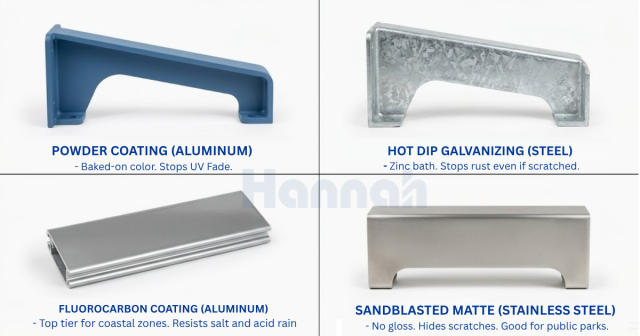
Powder Coat: Baked-on color. Stops UV fade. Used on iron and aluminum. 15+ year life.
E-Coating + Powder Coat: Two-stage protection for ductile iron. Excellent for coastal and high-humidity zones.
Fluorocarbon Coating: Top tier for coastal zones. Used on aluminum. Resists salt and acid rain.
Hot Dip Galvanizing: Zinc bath for steel. Stops rust even if scratched. 20+ year life.
Sandblasted Matte: No gloss. Hides scratches. Good for public parks.
For ductile iron, proper surface treatment is critical. We suggest the following procedure be used: shot blasting, zinc-based primer, e-coating, and top powder coat. This system seals the iron from moisture and extends service life past 20 years.
HANNAH Iron performs ALL 5-6 stages of processing ourselves. That means one-stop service. Design to delivery. No middleman. As a commercial park bench manufacturer China teams use, we control quality at each step.
How to Choose Best Material for Park Bench: 4-Step Process
You do not need to be an engineer to pick the RIGHT material. You just need to answer 4 basic questions. This stops mistakes. It saves money. It also gets you a chair that lasts 20+ years:
Check your climate. High salt? Pick coated ductile iron or aluminum with fluorocarbon. Dry heat? Pick aluminum. Snow + high use? Pick ductile iron or steel.
Set your budget. Need lowest 20-year cost + shipping savings? Pick aluminum. Need maximum strength for public spaces? Pick ductile iron.
Define use case. School or public park? Pick vandal-proof ductile iron. Restaurant courtyard? Pick light aluminum for moving.
Send files to HANNAH. We review your CAD. We suggest the best material for park chairs based on load, weather, and cost. Get a quote in 3 days.
There is one additional step that will be useful, but is usually neglected. Request a sample before placing the entire order. The sample proves that the shade, weight and quality of finish are truly correct. It is a minor thing that avoids major trouble later on. Also, check the expected weight limit if the chairs will be used in schools, parks, or other busy public areas.
Why Work with HANNAH: China Park Bench Manufacturer
You have many choices for an outdoor park bench supplier China. Here is why HANNAH is different.
Custom first: We do not use molds for aluminum. Every order can be unique. Good for distributors who need their own design. We maintain ductile iron tooling for high-volume runs.
Fast: From engineer to branded customer. Rapid prototyping to mass production.
Quality parts: ISO 9001:2015 certified. 2,000,000+ parts made. 3,000+ customers served. Certified welding processes for aluminum.
Full range: Not just park chairs. We make pergolas, bollards, iron fence, camping table, school desks, and home furniture.
One-stop: Laser cut, bend, weld, cast, finish, and ship. You deal with one partner.
Whether you’re ordering one custom aluminum chair or a large ductile iron production run, the same engineering support, manufacturing process, and surface treatment options are available. We also offer customization for features such as armrest shape, seat height, and frame shape to suit different projects.
Conclusion: Pick Ductile Iron to Hit 20+ Years
To sum up, the preferred materials for park chair projects are aluminum and ductile iron. They withstand 20+ years of operation with the right design and finish. If you need lightweight park chairs at reduced costs of transportation and complex custom designs, choose aluminum. If maximum strength, impact resistance, and theft-proof stability are needed for public spaces – select ductile iron.
The best park chairs should be comfortable and durable, even after years of outdoor use. In order to select the right material you have to consider three aspects. Climate, budget, and purpose of your benches. Combining these three, you will definitely end up with benches lasting longer than any other on the market.
At HANNAH Iron, we offer top class custom manufacturing for outdoor metal furniture built around real project needs, not standard catalog limits. Every park chair starts from your drawing or idea. Our engineering team checks the structure, load requirements, and environment before production starts. Drop a message to discuss your project today.
Did the retailers ever complain about people looking for a certain color gazebo that matches their main house? You are constantly failing to supply them. I mean, it’s not your fault that your manufacturer makes a limited design, material, and color gazebo. You can’t do anything about it. Or can you? It’s time for you to turn to highly customized gazebos wholesale supplier for your outdoor space.
If you’re a homeowner with an outdoor living space, you can get a customized gazebo with the color, design, and material you want.
1. Color Customization Precision to Match the House
Imagine you have a home with blue roofs and white walls. Everything around your home coordinates with that color palette, even the boundary wall and gate.
You are hoping to get a gazebo on your big garden that will also complement your home. You’re looking for a blue roof, but they’re nowhere to be found. You don’t wanna ruin the aesthetic of your property by installing a random colored garden kit.
If you are a distributor, your clients think the same way. Getting custom ones makes sure you get the precise match of the color on every part of the structure.
2. Gazebo Design Customization for Outdoor Space:
When it comes to design, one style doesn’t fit all. Homeowners want garden gazebos that match their home. As a distributor, you want a gazebo style that sells pretty quickly. The only way to do that is to order a customizable one according to your customers’ choice.
Match the Roof Style
When you look at a Gazebo, what do you notice first? Is it the roof? You’re not alone. Wooden gazebo or cheap metal gazebos come in one or two styles. But a highly customized backyard structure lets you pick and shape the roof you want.
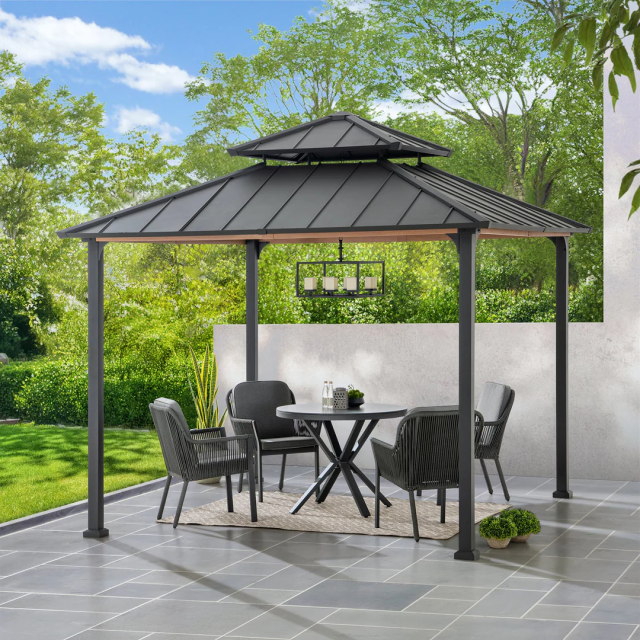
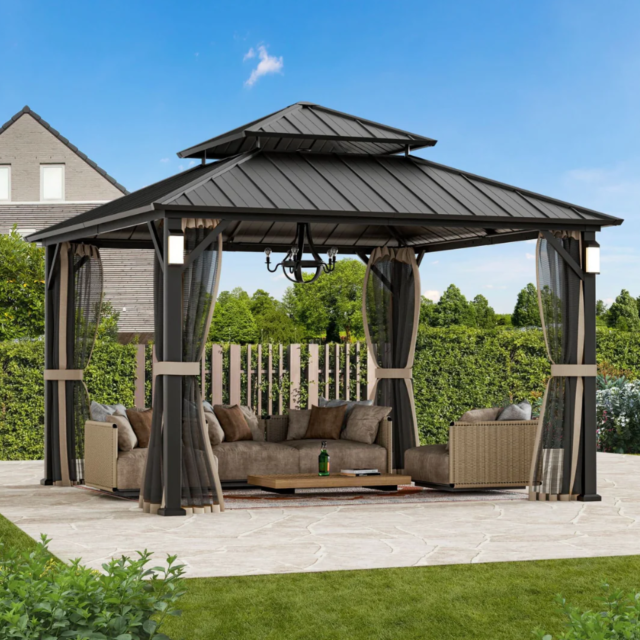
Want better air and wind ventilation? You can get double roofs in your hardtop gazebo. Wanna have the exact design on your patio gazebo roof just like your home roof? With our highly custom product lineup, that’s now possible. No need to buy that generic popular gazebo. You want your outdoor dining space to scream ‘Uniquely Iconic’.
Choose the Shape and Size
When homeowners are looking to get a backyard hanging spot, what may they be concerned with? As a homeowner with a small garden, would you want big oval gazebos that may get in the walking path? Or would you want a small octagonal outdoor gazebo in your big garden? I guess not.
Having highly customized shade gives you complete control over the shape and size. Oval, rectangular, octagonal – every shape is available in any size in customized gazebo creation. So distributors, have a gazebo collection with variety that’ll fit people’s outdoor space perfectly.
Pick Columns and Trim of Your Choice
Have you seen a nice-looking garden shade with cheap hollow posts? They hold up a complete structure. Don’t you think people should have control over the designs on them and how strong they are? With a highly customized gazebo, you are in charge of everything.
Want fully solid columns? You got it. Want handcrafted designs on the columns? You got it. Want modern square pillars instead of round? You got it. You can also get smooth-looking columns and trim with hidden screws. How about grill gazebos that protect the kids from going out from any side and increase architectural aesthetics? You can get anything you want for your backyard parties.
Add Built-in Comfort and Utility
I love this customisation feature. So will you! Gazebos work as an open-air living room for sure. However, you don’t want a sweaty afternoon tea in there on a windless day. Or you don’t want a family dinner in the dark at night.
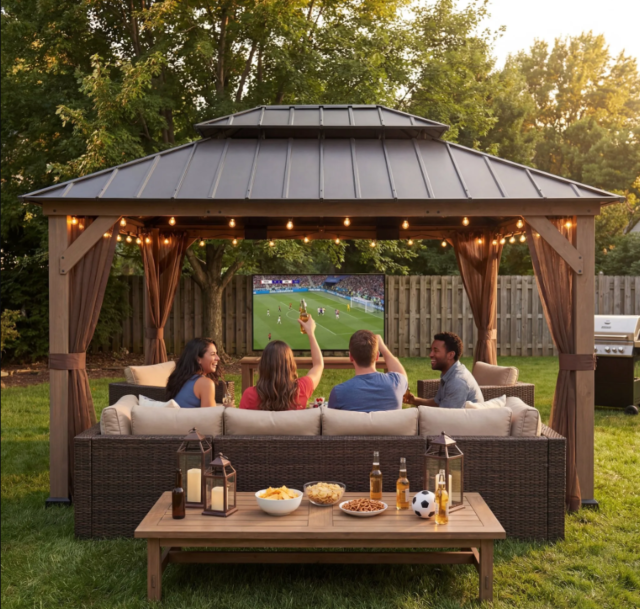
Homeowners want light, a fan, maybe a TV as well, that too without any messy cords. In Highly Customized gazebos, you can order hidden electrical wires drilled in the posts for comfort. These are in high demand. So, your business should distribute such gazebos for patio or garden for high profit.
3. Gazebo Kit Material Freedom
Homeowners doesn’t wanna wake up to a broken wooden gazebos mess on the morning after a heavy storm. They want a strong garden gazebo, not a canopy. For shade and protection, metal gazebo and pavilion kits are undoubtedly better than a traditional wood gazebo.
But which metal? You can pick that as well with our highly customized gazebo service. Pick from our best material options:
Stainless Steel
Maximum Corrosion Resistance:
This material gives superior resistance to moisture for your outdoor cooking space. You don’t need to put any extra layer of coating just to make it rust resistant.
Industrial Strength and Beauty:
For an ultra-modern look on your backyard party space, stainless steel can be your choice of material. It not only looks sleek, but it also provides high-end strength to the gazebo structure.
Galvanized Steel
Rust Resistant Coating:
This steel goes through a special coating process that gives protection from the elements. It’s a perfect fit for having a gazebo for outdoor events if you’re going for a reasonable rust-proof option.
Wind and Snow Load Resistance:
Hard roofs of this metal are comparatively thinner. However, its usual wavy structure on the roof gives it unmatched pressure and load resistance. It’s an exceptional innovation that lets heavy weight spread evenly on the structure. This makes this metal the best for areas with unpredictable weather and heavy snow.
Aluminum Gazebos
Perfect for Humid Weather:
Aluminum is a material that is naturally resistant to rust. So for humid areas with frequent rains or poolside locations, an aluminum frame is great. It’s a popular metal choice for an enclosed gazebo or grill gazebo.
Easy to Ship and Easy to Assemble
This metal gives massive structural strength even being comparatively lightweight. It makes commercial deployment easy. Besides, this outdoor garden kit is DIY friendly. Homeowners prefer this metal pavilion like other structures for an easy installation process.
Final take: All these materials give a massive advantage to you – distributors and homeowners alike. As a distributor, you can have a rust-resistant gazebo collection that sells more. As a homeowner, you win by getting a heavy-duty, strong garden structure that needs literally zero maintenance.
The Distributor Advantage on Custom Pergolas, Pavilion Kits, Gazebos for Sale
As a distributor of outdoor or garden structures, do you understand what your biggest bottleneck is? It’s your manufacturer’s product catalog.
Imagine a client walking in, asking for a specific color to match her house. Or looking for a unique design none asked for before. Your manufacturer only makes a few kinds of specific designs, colors, and materials. What do you say to the client? – “Sorry, we don’t have that.”
Do you understand that saying no means leaving a huge profit on the table? Time to turn into highly customized garden structures. What’s in it for you?
1. Total Design Freedom to Overcome Lost Sales
Partner with a manufacturer who gives highly customized products, making your inventory virtually limitless. You no longer have to persuade certain people wanting basic gazebo at a low price. With an infinite inventory, you now can confidently bid on high-end commercial projects and residential places.
With the customization option, you now can guarantee to provide precise color matching as per their requirement. Also, you no longer supply only the standard shape and size; you can bid on any big project. This will help you pick up more high-end clients with precise and unique blueprints for their outdoor areas.
2. Diversified Product Catalog with Three Materials
Having only one material for garden architectural solutions doesn’t really solve the pain point of every geology. Different geographical locations and environments need different metals to work better. We have a diverse product lineup across three premium materials: stainless steel, galvanized steel, and aluminum.
For example, aluminum frames on gazebos are most wanted for gardens in very humid and rainy areas. Galvanised steel is most suited for heavy wind and snow load resistance with a reasonable price. For maximum corrosion resistance and elite commercial venues, clients mostly choose stainless steel.
So having three different material personalization choices makes you cater to clients with different needs.
3. Straightforward Logistics and Low Overhead
These garden kits are manufactured and packaged as modular units. These can be easily assembled once they are in their garden location. So no need to fill your warehouse with pre-built bulky structures.
Kits arrive as flat-packed, easy-to-assemble pieces that maximize your storage volume at the lowest floor area. Besides lowering your storage costs, this lowers your freight costs as well.
Create Your Dream Gazebo, Pavilion, Pergola, with Hannah: Over 20 Years of Crafting Outdoor Structures
Distributors,
At Hannah, we don’t just manufacture outdoor structures; we create permanent garden architects using premium metals. Our custom materials include marine-grade stainless steel, rust resistant aluminum and heavy duty galvanized steel.
Looking forward to scaling to more premium and commercial clients with specific customized blueprints? Partner with Hannah and unlock all those possibilities with our craftsmanship excellence of over 20 years. What you get:
Say ‘Yes’ to every client with any design requirement.
Maximize your profit margins with a premium product catalog.
Win high-end contracts with complex blueprints.
Offer your clients precise color, design, size, shape, and material matching.
Get flat-packed modulated units to directly send to clients.
Minimize freight and storage costs, etc.
Homeowners,
Transform your backyard with the reflection of your home with our custom garden kits. Why settle for a cheap canopy when you can get a permanent and elegant garden shade of premium metal?
With Hannah, you are in complete control of the size, shape, material, color, and design of your backyard gazebos. You can also customize different materials for different parts of the structure. Want a galvanized steel roof with stainless steel posts? You get that with us. What else you get:
Built to exactly fit your specific backyard, garden, or patio.
No maintenance is needed on our three premium metal options.
Bring the indoors outdoors with customized features like lights, fans, and a TV.
Stay hassle-free from reconstruction or repair for decades.
Arrange house parties outside in the garden.
Fully covered solid double-layered roof for better air ventilation.
So, to custom-make your dream garden architectural structure, contact us today.
Frequently Asked Questions – You Ask, We Answer!
Q1: What is the process for ordering a custom gazebo?
It’s pretty straightforward. Contact us and choose the dimensions, any material from stainless steel, galvanized steel, and aluminum. Also choose the roof pitch, shape, and any custom feature you desire. Finally, ask for a 24-hour quote to place an order.
Q2: What are the popular styles and sizes for custom gazebos?
To give you an idea of what sells the most, the most popular styles are octagonal, rectangular, and oval hardtop-structured gazebos. In terms of size, 10×10 and 10×14 are the most popular. However, with highly customized options, you can pick any style and size that suits your boat.
Q3: How long do custom gazebos typically last?
A custom gazebo with premium metal will stand the test of time for generations to come. If it’s made with high-quality stainless steel, your backyard shade will be almost permanent. With superior rust-resistance ability, it will last for many decades.
A custom gazebo made with galvanised steel will last and be corrosion-free until its special coating wears off. Even then, it’ll last for a few decades.
As for aluminum, none of your backyard garden structure will ever rust or corrode. A metal can corrode only if there’s iron in its molecular structure. So aluminum ones will practically last forever.
Q4: Can the gazebo support a ceiling fan and/or a TV?
A generic one may or may not. But a highly customized gazebo, pergola, pavilion, or any other garden architectural piece definitely can. They are fitted with hidden factory-routed wires to support light, fan, or TV during the manufacturing process.
Q5: How do you anchor a gazebo on concrete?
As a homeowner, Anchoring gazebos feels like a 10-person job. In reality, it’s not that big of a deal. It depends on the foundation it will stand on. For concrete patios or hard ground, insert the strong masonry anchors or expansion bolts. This will let its feet tighten securely.
Rust Resistant Iron Flower Beds for Outdoor Use: Durable Metal Raised Garden Bed Kit Supply
Nature is tough, but your flower beds should be tougher. Wooden beds rot. Plastic beds crack. Cheap metal ones become an eyesore before you can see the first flower on your plant. What’s the strongest solution then? – Iron garden beds. But they also rust. This is the primary concern for homeowners and distributors alike. When you put an iron planter box outside, open to constant moisture, you can’t expect it not to rust. Unless they are our rust-resistant iron flower beds for outdoor use.
It seems impossible to make iron not corrode, right? But Hannah has the solution. Let’s see what it is.
Galvanized Steel: The Best Iron-based Material for Rust Free Quality Raised Garden Beds
Let me word it bluntly. However premium and corrosion-resistant someone claims their pure iron to be, it’s a lie. Put their iron garden bed out in the air, and give it a few days.
See, Iron loves water and oxygen a little too much. This leads to orange flaky rust, which is basically hydrated iron oxide. This makes the strongest element in the universe start to decay.
To fight this problem, Hannah manufactures Galvanized iron raised beds. This bed is made with a star material, which is Iron with an extra protective layer of Zinc. This layer shields the iron metal beds from moisture and Oxygen.Result? – A rust-resistant heavy duty Iron beds that you can use all season outdoors.
Why Galvanized Steel Is Used for Long-term Rust Resistance
If you’re thinking the protective layer is just some kind of cheap paint over iron, you’re mistaken. You may have seen some rusty galvanised iron garden beds after a few months. The ‘long-term’ durability claim felt like nothing but some empty promise.
We get it. It’s absolutely okay to be suspicious.
But our galvanised iron garden kits are gonna change your perspective. We use a thick layer of Zinc to coat the iron garden bed evenly.
Sourcing a cheap galvanized steel garden bed from other manufacturers may be frustrating. The thin and cheap layer chips off the moment a shovel hits it. Result? – Rust builds up just after the first rainy season. Too many complaint calls are normal.
But when a high-quality and thick layer is used, the bed survives many chaotic planting seasons with an intact protective coating. Result? – long-term rust resistance.
How the Zinc Coating Protects Soil and Plants of a Raised Bed Garden
Homeowners, I know what you’re thinking. All this chemical stuff! They may protect the iron, but are they safe for the plants and soil like the wooden raised beds? Absolutely. The zinc coating of the galvanized raised garden bed kit maintains soil and plant health alike.
They are non-toxic and stable. So, the coating itself does not undergo any chemical reaction with the underlying Iron, fertilizer in the soil, or elements in the air.
Besides, zinc is a necessary micro-ingredient for plants. Still, it makes a perfectly neutral environment inside the raised metal garden bed for plants. It protects the iron from oxidizing, keeps the earthworms happy, and helps your garden to flourish.
Why Are Galvanized Metal Raised Beds the Best for Intense Outdoor Use
What is the best rust-resistant metal for outdoor flower beds? – Galvanized steel any day. We know that already. But why is it the best for outdoor use?
Here’s why:
1. Shield Against Humidity and Moisture
See the dichotomy – water is every garden’s best friend, but traditionally it is iron’s worst nightmare. So, whether it’s heavy downpours or constant coastal humidity, your outdoor raised garden bed metal will be protected with the Zinc coating.
Garden beds made with Galvanized metal have a multi-layered defense system to lock moisture out. The garden boxes outdoor can deal with non-stop moisture, but the iron core below the zinc layer is gonna be bone-dry. So, the planter raised garden can be rust-free for decades.
2. Extreme Weather with Heavy Winter Frost
Can the metal raised garden bed resist the cold if we live in an extremely cold area? – a very common question we get. Yes, frosty minus temperature has no effect on a galvanized planter box. It’s gonna be rust-resistant and durable in extreme weather like heavy snow as well.
However, it cannot protect your flowers or vegetable plants. You still need an outdoor greenhouse for extreme cold areas.
3. UV-resistance to Stop Fading or Cracking
Plastic planter garden boxes, cheap or premium, will always bake in the sun and fade and get brittle over time. One hot summer in the sun, and watch your plastic tub crack like eggshells.
Galvanized planter garden bed is made to withstand constant UV rays. The color never fades, nor does it crack. Distributors of landscaping kits, source elevated garden beds ft galvanized steel. Provide a weatherproof best raised garden bed to your client for both rain and sun.
4. Structural Integrity Against Soil Pressure
The frame of plastic beds is not very thick like a wood raised bed. Filling it only with dry soil can also exert extreme pressure on its wall. Now imagine watering the soil daily. Wet soil increases pressure by double, which can bend the wall pretty easily.
However, zinc-coated iron garden beds have very high structural integrity. Usually, this raised garden bed is made of Q195 galvanized metal sheet. You can custom order metal of Q235 and Q345 grade for higher tensile strength. So even with huge soil pressure on large metal raised garden beds outdoors, the walls won’t warp or bow.
5. Low Maintenance Requirement in Outdoor
Unlike wrought Iron garden planter boxes, galvanised outdoor metal beds don’t need to be taken care of frequently. No need to dust every day, nor wipe them dry after every drizzle. Simply, no hassle!
You can leave them all dirty for years if you want to. Well, your garden may look a lil ugly, to be honest. However, wipe them with a clean wet cloth to remove dried-out soil and dirt. The shiny texture and color will be just as new.
6. Cost Efficiency in Outdoor Garden
Can you use galvanised steel raised beds for your indoor flowers? Of course. But you’d want to grow an indoor plant beside your bed or in your living room on something premium. How about a luxury porcelain tub or an antique wrought iron planter box?
However, for a large garden area like an outdoor garden with multiple raised beds, such an expense may not be suitable. Zinc-coated iron garden beds are the best budget-friendly option for outdoor use. Theft-proof too!
Placing Your Bed in Versatile Outdoor Spaces
Unlike some other materials, Galvanized Iron garden beds can be placed in versatile outdoor spots. As a distributor, this increases their market volume and your revenue margin.
Traditional Garden or Backyard
Let’s start with the traditional spot – the garden of the house. These zinc-coated outdoor planter boxes come in various shapes and sizes. They are also easy to set up. Yes, you can plant directly into the soil. But having raised beds for garden plants makes it look more organized and intentional.
You can also set up large metal garden beds in your backyard to have separate patches dedicated to your flowers, vegetables, garnishes, and fruits.
Patio and Hard Floors
What if you don’t have a backyard? Instead, you have a boring empty patio. You can give it some life back and turn it into a small garden. No one said Rust-resistant iron beds can not be placed on concrete or hard floors.
You can have a garden bed planter with a good height and set it up on your patio. Fill it up with soil, grow plants, and enjoy having a garden in your small house.
Entryways of Urban Housing
What if you live in an urban apartment-style house with no backyard or patio as well? You can set a few small raised garden boxes outdoor on the tight front porch or entryway. This is gonna lift up your energy without even having a proper garden.
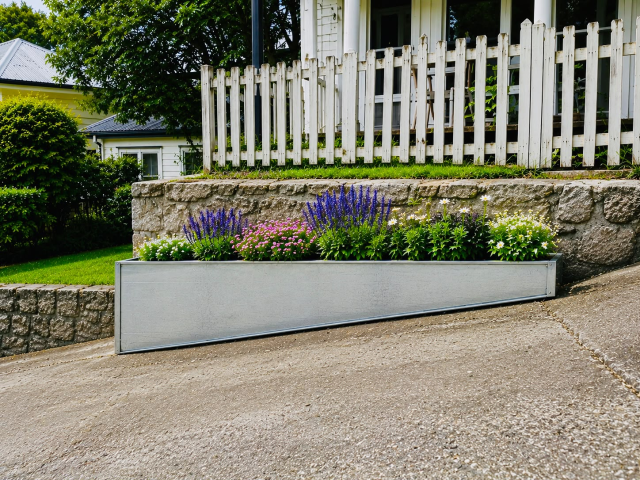
Sloppy Driveway
Galvanized iron garden beds don’t have to have symmetrical walls as usual. Do you have a sloppy driveway in your front yard, and you want to decorate it with these metal planters?
You can custom-make these rust-resistant iron garden beds according to the slope of your driveway. It shows that anywhere can turn into an ideal garden ft galvanized raised garden bed outdoor.
Why You Should Partner with Hannah: A Manufacturer Making Durable Premium Metal Raised Garden Bed Kit
Distributors,
How long do rust-resistant metal garden beds typically last? If your answer is 3-4 years. Time to switch your supplier. At Hannah, raised beds are made to thrive for at least ten rainy seasons before showing visible corrosion. This will increase your brand authority and customer satisfaction rate.
Rust-resistant, durable, and strong Galvanised Iron sounds amazing. But the cherry on top is that you can customize this garden bed at Hannah with any shape and size.
All the classic shapes are available, like oval, rectangular, round raised, or U-shaped raised beds. 8x4x2ft galvanized raised garden bed or 6x3x1ft galvanized raised garden bed? You can bulk order them in popular raised bed sizes or any custom sizes.
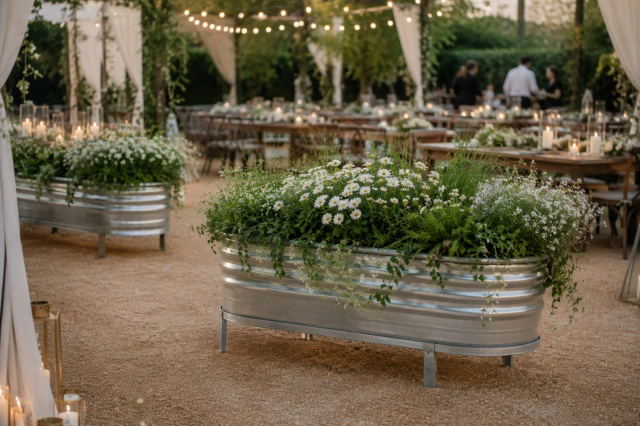
Besides homes, raised garden bed with legs are very trendy in restaurants, outside corporate offices, wedding and party venues. Raised beds without legs are in high demand for community garden as well. So besides selling only to common homeowners, partnering with Hannah gives you confidence to bid for more high-end commercial projects.
Our flat-pack modular units are good for your logistics as well. They can save on storage costs and freight costs. Besides, they come ready to be distributed, so you don’t need to spend anything on packaging.
Contact us today to make your catalog virtually unlimited and create more project opportunities.
Homeowners,
At Hannah, we manufacture rust-resistant iron beds that will last for generations. These beds are designed to match your home aesthetics. Want the exact color match between these galvanised panels and your home? Sure!
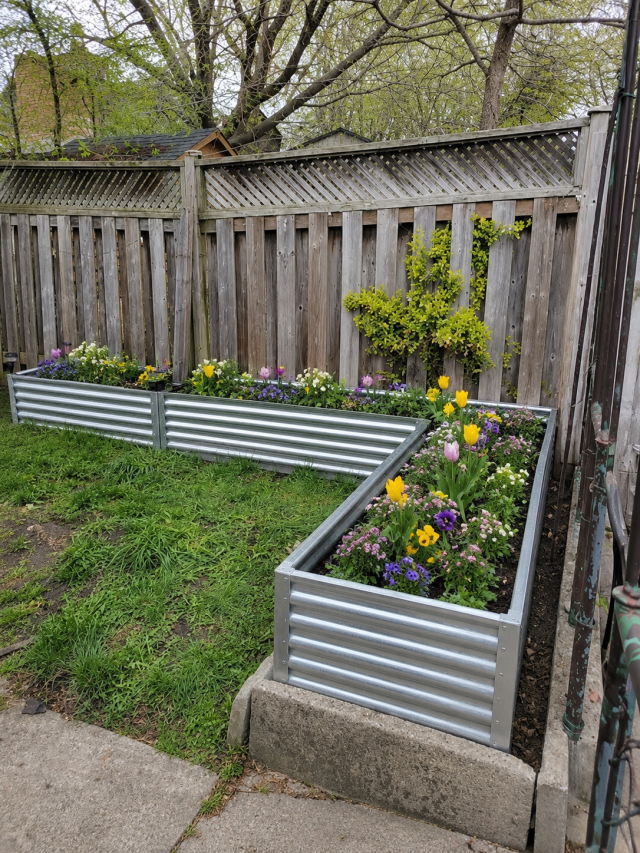
An oval large metal raised garden bed looks great. But it leaves a lot of unusable space if you place it in a corner. At Hannah, you can also get corner optimization. Get a unique bouquet-like shape that perfectly fits the corner while having a rounded third arm. Or we can custom-make a triangular-shaped or L-shaped bed to fit your corner.
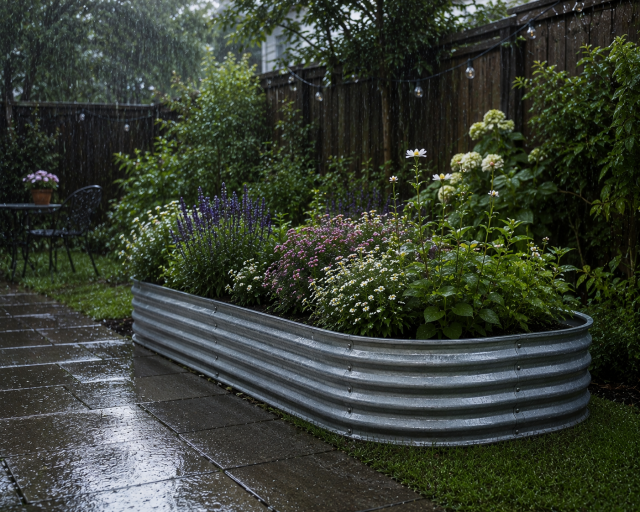
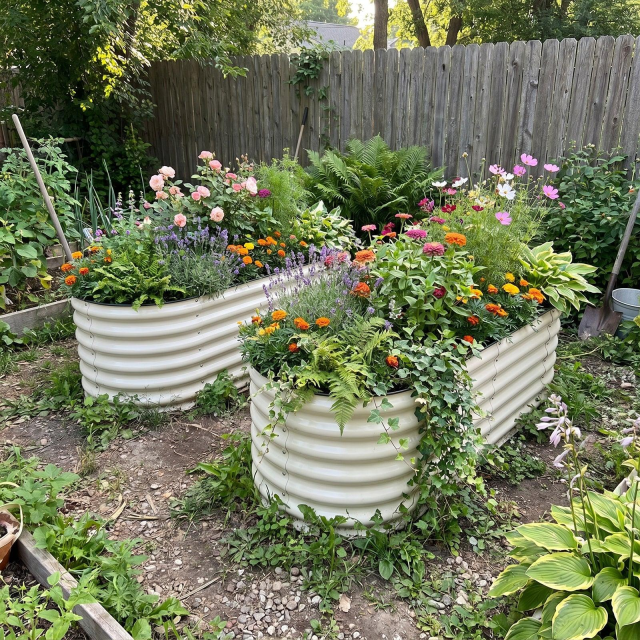
Galvanised iron usually comes in two structures – Smooth and corrugated or wavy. Besides the standard sizes like knee height, calf height, waist height, any other size can be made as well.
With Hannah, make your dream garden where new flowers bloom every season in newly looking garden beds, not old rusty ones.
Frequently Asked Questions – You Ask, We Answer!
Q1: How can I prevent or repair rust on metal garden beds?
To prevent rust on metal garden beds, use materials like galvanized steel and avoid deep scratches with any sharp tool. If it got scratched anyway and started to corrode, immediately remove the loose rust with sandpaper. Then paint or spray that area with a cold zinc-rich galvanizing formula from the store.
Q2: Are the beds bottomless?
Yes, garden beds are bottomless, unlike garden tubs. The bottom of the bed is open to let plant roots grow freely deep into the soil and ensure proper water drainage in the ground.
Q3: Can I move or reconfigure the bed after assembly?
Absolutely. It’s very easy. Just unscrew the bolts of the separate panels and move it to a new spot in the garden. Then reconfigure just like the first bed and fill your bed with soil again.
Q4: Galvanized beds may be more durable and able to last longer outdoors, but are they harder to setup?
No, quite the opposite. Setting up these beds is straightforward and takes a few simple steps with basic tools like bolts and screws. A full kit of garden bed comes with these basic tools and a clear written manual.
Q5: How wide should a raised garden bed be for easy access?
4 feet is the ideal width of a raised garden bed for vegetables or flowers. This allows you to reach the center of the bed easily to harvest vegetables or anything else. No need to step inside the bed.
Q6: How long does it take to receive a rust-resistant raised garden bed kit, and what does setup involve?
As a direct manufacturer, we deliver a pre-made rust-resistant raised garden bed kit within a few days. For custom orders, it can take longer. Contact us to get to know our delivery time for your specific order and location.
The setup involves unpacking the flat-pack modular units and joining the panels together. The necessary hardware comes with the kit.
Iron Flower Beds: The Customized Metal Raised Garden Bed Solution for Distributors and Homeowners
It was the Spring of 2004 – I planted some beautiful Orchid trees on our wooden flower bed. I adored them and thought they are gonna thrive in the years to come. But by 2006, the wooden border of the garden bed completely rotted away. The roots of my beautiful orchid tree were damaged by pests, and it eventually died. My frustration made me realize the necessity of iron flower beds. But it was too late for me.
However, it’s not too late for you. Elevated garden beds come in various materials. Your garden is built on memory, and it deserves something permanent like a wrought iron garden bed.
Why Pick a Wrought Iron Garden Bed over a Raised Garden Bed of Other Materials?
I know what you’re thinking. If there are more materials, what’s so special about wrought iron, and what difference will it make compared to other flower planting beds? Here’s why:
1.Wrought Iron VS Stainless Steel Raised Garden Beds
Stainless Steel is as strong as Wrought Iron. However. where it fell a lil short is the rustic elegance. It sure looks sleek, but it also looks a bit sterile. If we were talking about Garden chairs, I’d suggest these materials over Iron. But it doesn’t quite match the rugged aesthetics we look for in a flower garden. If you like shiny things, go for it. It just doesn’t scream ‘Organic Sanctuary’ to me.
Wanna give your raised flower beds a timeless and classic look? You can choose from our customized wrought Iron garden beds. For distributors, we have bulk ordering custom-size raised beds.
Still prefer rust and corrosion free modern metal garden beds? Hannah stainless steel raised flower beds as well for corrosion resistance, just for your premium taste.
2.Wrought Iron vs Wooden Raised Rarden Beds
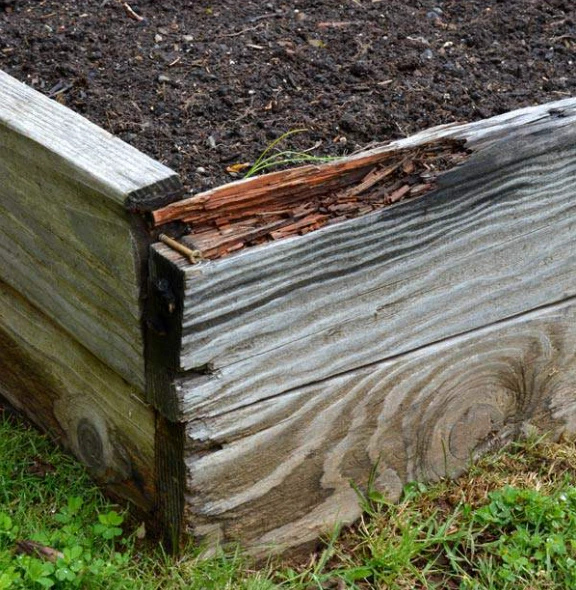
We all love traditional wooden garden boxes to give our flower plants a farmhouse vibe. Then after a year or two, we are left with rotting, warped pieces of ugly wood. It’s been a home for thousands of termites, you don’t know, since when. Let’s be straight – wood absorbs water, splits in the snow season, and finally decays.
Are you a homeowner? Not a good investment on a garden bed, I would say. Wrought Iron raised flower beds will act as a permanent fortress for your soil. Also, no sweat to rebuild your garden every few springs.
Are you a distributor? You don’t wanna sell something that gets you complaint calls just after 2 years from angry retailers and customers. So, sourcing luxury garden inventory with iron flower beds will increase your customer satisfaction and high-margin profitability.
3.Wrought Iron VS Galvanized Steel Raised Garden Beds
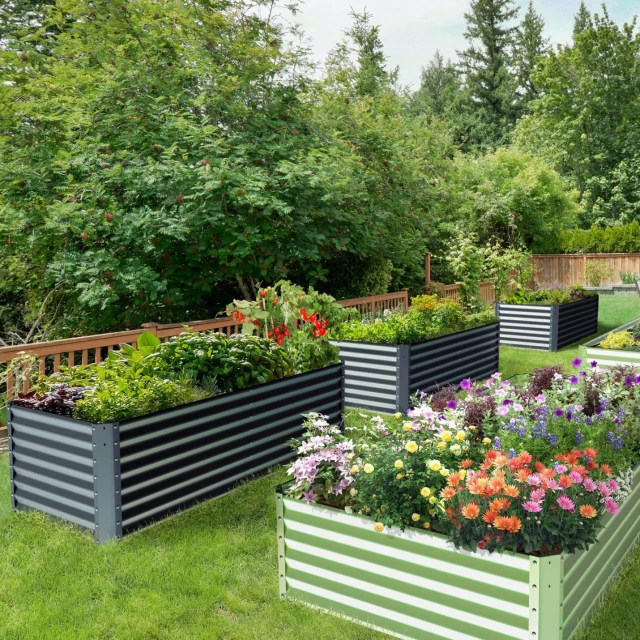
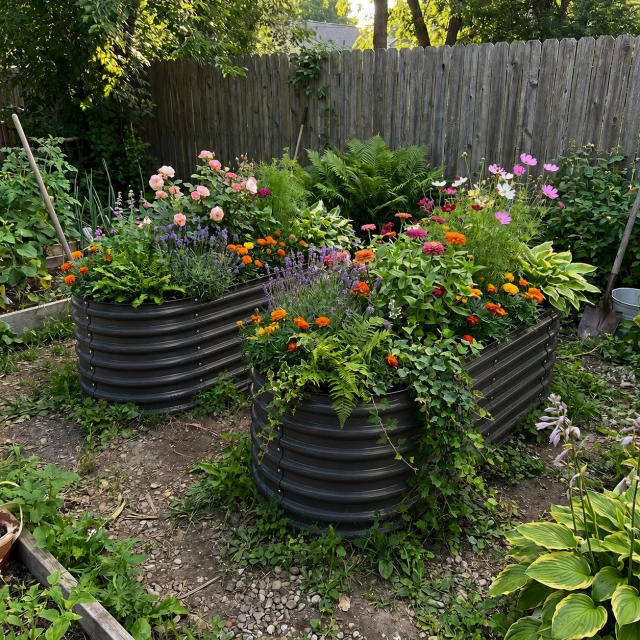
Search ‘metal container gardening’, and you’ll see wavy metal sheet flower beds. In industrial terms, we call them corrugated metal raised garden beds. The material used in them is galvanized steel, also called Aluzinc steel. Those metal wavy sheets look very nice, but it sure looks fragile, right? Wrong!
It’s as durable as Iron – lasts for years. Then what’s the problem with Galvanized metal raised planter boxes, you ask? Yes, it doesn’t rot like wooden beds. However, cheap aluzinc-coated steel garden beds bend, warp, or bow under soil pressure over time.
So, for structural strength, the iron garden bed kit always wins. To all businesses, you can get wholesale wrought iron garden decor products for low-maintenance commercial landscape planters.
Still prefer galvanized metal? No worries, we at Hannah manufacture high-quality galvanized steel garden beds that don’t bend easily.
4.Wrought Iron vs Plastic Raised Garden Beds
Plastic beds are lightweight and cheap with elegant color options. Highly tempting – I agree! Just give it one summer outside in the sun. By the time autumn comes, you’ll ask where the vibrant color went. The harsh UV rays will turn it brittle and faded in a few days of baking.
A light bump of the lawnmower, and your garden space will have cracked beds all over. I didn’t even get started with the toxicity yet. These cheap plastic raised flower beds under harsh UV rays leach toxic chemicals. Would you want your flower roots to be harmed?
From a business perspective, plastic garden beds may sell in quantity, but it’s a very low-margin product. Get into a race of profitability with a product with the lowest price. Looks like you’re aiming to come last. So, get high-margin garden center products to outlast any competition.
Are Metal Raised Garden Beds Safe for Plants?
This is the first question coming into the mind for any gardener. What happens when July hits? Will they cook my flower plants? Will they release any toxins into my organic soil?
Fair questions! Whether you’re a homeowner investing your money and love into your garden or you’re a distributor confidently reassuring retailers for their eco-conscious customers, you need the hard facts.
In one sentence, It’s not only safe for flowers, plants, and vegetables, but they might even prefer it. But why?
Do Metal Raised Garden Beds Get Too Hot?
Iron gets too hot in the sun – So it only makes sense if the soil bed in this iron also turns into some kinda oven, right? Wrong again! Surprisingly, it’s completely opposite. Wrought iron can conduct heat very well, which makes the heat distribution very even.
The soil at the very edge of the raised flower beds can get slightly warm. But the soil temperature at other points stays perfectly regulated. This is also good for the effectiveness of compost or fertilizer on the soil.
Do you live or distribute garden products in freezing cold? Iron flower beds are also perfect to use in a greenhouse with cool soil temperature.
Do We Get Any Soil Contamination from Iron Flower Beds?
Absolutely not! You may have seen it in cheap plastic beds, but as eco-raised garden beds, wrought iron is perfect. Tests have been done on vegetables grown on iron garden beds. No toxins or heavy metals anywhere to be found.
New generations are shifting to eco-friendly and non-toxic consumer practices worldwide in every sector. They don’t even hesitate to invest more for a healthy, durable, premium quality alternative to plastic. So it’s only wise to source wrought iron eco flower beds to maximize your profit.
For the Distributors: Sourcing Wholesale Metal Raised Beds
Are you a commercial landscape distributor? If you want high return rates rather than high profit margin, keep selling cheap and poor-quality metal and plastic raised beds. You don’t want that, do you? You sure want your inventory to balance between strong profit margin and bulletproof customer trust. It’s time for you to scale up your inventory with wholesale iron raised garden beds
1.Maximize Your Profit Margin
The gardening solution kit has always been a very competitive market. Everyone sells cheap plastic and metal flower beds where the profit margin is also low. You can source heavy-duty wrought iron raised garden beds and get a competitive edge over others.
While other retailers will be seen as just another place selling backyard boxes, you’ll get a distinct identity. You’ll get to reposition your storefront in a luxury landscape bracket. What does a High-ticket premium statement piece give? – High retail price and higher profit margin.
But will people buy such premium-quality iron garden beds? – you ask. If customers are given a high-quality garden bed alternative that needs no replacement every few years, will they buy it? – You tell me.
2.Flat-pack Logistics and Freight Efficiency
No matter how big your warehouse is, it has a limited space. Buying cheap, low-quality raised garden beds from manufacturers is gonna hurt your business. Imagine purchasing wholesale, shipping them to your location, and filling your whole warehouse with them. After this, is the little profit even enough to cover the quarterly overhead?
Unlike Plastic garden kits, iron ones are engineered to be manufactured in flat-pack modular units. The pallet packing efficiency is high, keeping your transportation cost low. Also, wouldn’t you love storing maximum inventory in the minimum floor space?
3.Versatility in Customized Design
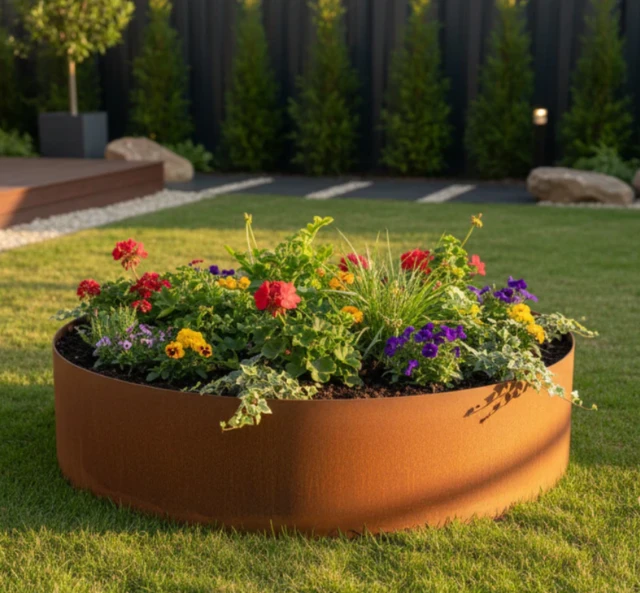
Wrought Iron allows customization in shape, design, and other architectural needs of your client base. Iron flower bed edging has no limited shape. Don’t like sharp edges on a square or rectangular bed? – it can be made rounded. Want a U-shaped raised flower bed? Wrought iron can be shaped like that.
These heavy duty raised planter boxes can be manufactured in any dimension. They’ll suit to decorate not only homes but commercial spaces like offices, restaurants, public places, etc. So unlike cheap plastic or wooden flower beds, the market demand for iron beds is huge.
4.Minimize Customer Support Overhead
As a B2B distributor, have you seen anything more draining like after sales complaints? I didn’t even get started with a bad reputation, with negative reviews. This is exactly how a business goes bankrupt unless they shift to some high-quality and durable products.
Sourcing high-durability wrought iron garden beds will help you build long-term brand trust and gain word-of-mouth referrals. And complaint calls? – With Iron gardening solutions, watch them run out the window.
Guide to Set up and Maintain our Iron Garden Beds
How Do You Fill a Metal Raised Garden Bed?
This goes for both a distributor urging the retailers providing on-site installation or a homeowner. The modular metal raised garden bed has an easy configuration to set it up. These are designed for easy assembly with some metal screws and a clear manual.
After installation, you can fill it up with bulk organic soil. But we recommend layering organic materials to set up the healthiest soil bed for plants. You can start with logs and branches at the bottom. – helps with irrigation and drainage. Then add layers of grass or leaves, 6- 8 inches of organic compost, and top it off with soil.
Maintain Well for Maximum Value for Cost
Wrought iron metal beds are highly durable either way, but with little maintenance, they can look pristine for years. If you’re a homeowner, brush the dust off with a stiff brush. Make sure to clean moss or algae off the bed. If you spot loose rust, take some sandpaper and remove it.
If you’re a distributor storing bulk iron garden beds in your warehouse, make sure to store them in dry and well-ventilated places. A damp environment leads to rust on Iron.
Ready to Elevate Your Garden or Business With Premium Iron Flower Beds? Pick Hannah!
Homeowners,
The garden you’re building on memory and love deserves to outlive for generations. We at Hannah have all your gardening solutions to give your plants a bed that lasts for decades. Leave an elegant gardening space for your future generations to cherish, nurture, and remember you by.
Distribution partners,
The quality of your supply chain decides your reputation in the commercial and retail market. Why risk it by supplying from manufacturers producing cheap and low-quality garden beds? At Hannah, our modular flat-pack garden beds will minimize your freight costs, maximizing your inventory storage. With our premium high-durability raised flower beds, make more profits while maintaining 100% customer trust.
Promise is overrated when it comes to doing business. So we’ll let our certifications from international regulators speak for us. ISO Quality Management System Certification, National High-tech Enterprise Recognition, SGS Export Factory Compliance Certificate – we’ve got it all.
Frequently Asked Questions – You Ask, We Answer!
Q1: Can a raised garden bed be placed on the concrete ground?
Yes, you can place or install it on concrete or a hard surface. Just make sure to fill it up with soil high enough. This way, your plants have plenty of room to grow without hitting the concrete ground.
Q2: Can wrought iron flower beds be customized to fit architectural specifications?
Yes, Hannah offers custom sizing, specific geometry, or any other customization request from your business to meet your customer base’s needs.
Q3: How long do metal raised garden beds last?
Unlike wooden beds, wrought iron flower beds are built to last. However, it is vulnerable to moisture, causing rust. Still, with some maintenance, it can last for 15-20 years.
Q4: What is the assembly labor time needed for on-site commercial installation?
If you’re providing on-site commercial installation to your customers, sending one laborer with basic tools will be enough. Our metal raised garden bed kits are easy to assemble with a quick setup bolt system. The laborer needs about 15 minutes to install a standard raised garden bed kit.